Primal Grow Pro Official Website › Blog › Two Amino Acids On A Botanical Label
Two Amino Acids On A Botanical Label: L-Carnitine And L-Glutamine
Five of the seven names on this bottle are botanicals. Two are not. The two exceptions are the least exotic ingredients on the label and the ones whose trial doses are measured in grams, which makes them the clearest illustration of what a capsule can and cannot hold.
- L-carnitine and L-glutamine are amino compounds the body makes and food supplies, not botanical extracts.
- Both sit under the seller's “energy” support, and neither is a stimulant.
- The carnitine trial closest to this shelf used two grams a day, alongside a prescription medicine.
- The glutamine tolerance work is dosed per kilogram of body weight, in grams.
- A whole capsule holds under a gram of everything, so neither can be present at its studied amount.
The two names that are not herbs
Reading the supplied ingredient artwork straight through, five names are plants or plant derivatives: ginkgo leaf, bacopa, St. John’s wort, huperzia and the vincamine derivative vinpocetine. Two are not: L-carnitine and L-glutamine.
Those two belong to a different family of supplement ingredient entirely. They are compounds the human body already makes and already takes in from ordinary food, sold as supplements on the reasoning that more of a thing the body uses might help where supply is limiting. That is a perfectly respectable rationale and it is a different rationale from a botanical’s.
It also means their evidence works differently. A botanical extract is trialled as a preparation: a specific extract, standardised to a specific marker, at a specific daily amount. An amino compound is studied as a nutrient, usually against a background of whatever the participants were already eating, and the amounts used reflect that.
What carnitine does, and what was tested
L-carnitine’s job inside a cell is transport. It shuttles long-chain fatty acids across the mitochondrial membrane so that they can be oxidised for energy. That is a real and well-described biochemical role, and it is the reason the ingredient appears under an energy heading on labels across several categories.
The body synthesises it from two amino acids, lysine and methionine, and takes the rest from red meat and dairy. Genuine deficiency in a healthy adult eating an ordinary diet is uncommon.
Its relevance to this particular shelf rests on a specific and much-cited result. A trial of propionyl-L-carnitine at two grams a day, given alongside prescription sildenafil in men with diabetes and erectile difficulty, reported better outcomes than the medicine alone. It is a real finding and it belongs to the combination that produced it, which included a prescription medicine. A capsule is not a prescription medicine and nothing on this website suggests it behaves like one.
A meta-analysis of carnitine, coenzyme Q10 and selenium in couples with unexplained male infertility is the other substantial body of work on carnitine in this territory. It too used gram-scale daily amounts.
Two safety notes worth recording rather than hiding. The study that identified the TMAO pathway and its follow-up in human volunteers describe how gut bacteria convert dietary carnitine into a compound associated with atherosclerosis. That literature is about habitual dietary intake rather than about a capsule, and it is an open question rather than a settled harm. And a review of amino-acid supplement safety found no kidney signal at ordinary intakes in healthy people.

What glutamine does, and how it is dosed
L-glutamine is the most abundant free amino acid in human plasma. It is a fuel source for the cells lining the gut and for immune cells, a nitrogen carrier between tissues, and a precursor for several other compounds. Under severe physiological stress, such as major burns or critical illness, it becomes conditionally essential, which is the setting most of its clinical literature comes from.
For a healthy adult the picture is much quieter. Ordinary protein foods supply it in quantity, the body makes more, and supplementing it has to clear a fairly high bar to change anything.
The study that establishes what an oral serving actually looks like is a tolerance study in healthy adults, and the important thing about it for a label reader is the unit. It dosed per kilogram of body weight: 0.3, 0.6 and 0.9 grams per kilogram. For an eighty-kilogram adult the lowest of those arms is twenty-four grams in a day.
That is not a criticism of glutamine, which is safe, cheap and well understood. It is a statement about scale, and the scale is the point of this article.
The scale problem, in one table
Setting the trial amounts against the size of a capsule makes the arithmetic plain, and the arithmetic is not a matter of opinion.
| Ingredient | What the trials used, a day | What that is in milligrams |
|---|---|---|
| Propionyl-L-carnitine, with prescription sildenafil | 2 g | 2,000 mg |
| Carnitine in the male fertility literature | 1 to 3 g | 1,000 to 3,000 mg |
| L-glutamine, tolerance study | 0.3 to 0.9 g per kg of body weight | Roughly 24,000 to 72,000 mg for an 80 kg adult |
| A whole capsule of this product, all seven ingredients together | Under 1 g in total | Under 1,000 mg |
The last row is the size of an ordinary capsule rather than a figure from this label, which prints none. It is the constraint every other row has to fit inside.
The last row is the constraint. A capsule of the size these products use holds something under a gram of powder in total, and this one has to hold seven ingredients plus whatever flow agents and fillers the manufacturer uses. Neither carnitine nor glutamine can be present at the amount its own research used, and no arrangement of the other five changes that.
This is exactly the kind of conclusion that a label with printed amounts would let a buyer reach in ten seconds and this one does not. It can still be reached, and it is reached here by arithmetic rather than by insinuation.
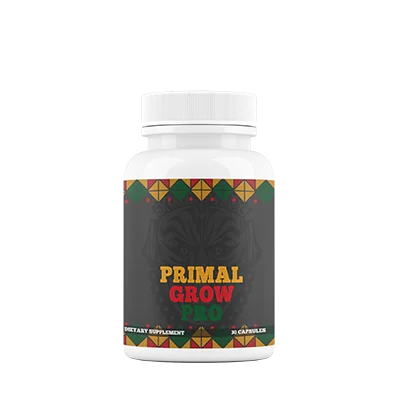
Seven names, printed openly
One capsule a day with a meal, thirty to a bottle, free US shipping on every pack and sixty days from purchase to decide.
One bottle $69 · four bottles $196 · 60-day money-back guarantee
Order Primal Grow Pro On The Official WebsiteOne capsule a day · 30 per bottle · lot PRI-26/PR-3833
Food supplies more than a capsule can
The other useful comparison for these two rows is not a trial at all. It is dinner.
| Source | Roughly how much carnitine | Comment |
|---|---|---|
| A 100 g serving of beef | Around 80 mg | The richest ordinary dietary source, by a wide margin |
| A 100 g serving of pork | Around 25 mg | Still well ahead of most foods |
| A glass of milk | Around 8 mg | Dairy is the second dietary route |
| The body's own synthesis | Continuous | Made from lysine and methionine, which is why deficiency is rare in health |
Approximate figures from the general nutrition literature, included to give the gram-scale trial doses some ordinary context.
A substantial serving of red meat supplies more carnitine than most supplements do, and any protein-containing meal supplies glutamine in quantity. That is worth saying because it puts these two ingredients in the right register: they are nutrients, present in food, not exotic compounds that a capsule is the only route to.
It also means that the marginal value of a small supplemental amount, on top of an ordinary diet, is likely to be small. Where amino supplementation has produced results, it has usually been at doses several times anything a multi-ingredient capsule could hold, and often in people whose baseline was unusual.
- Not stimulants. Nothing about either compound produces a same-day effect.
- Present in food, in amounts a capsule cannot match.
- Studied in grams, which decides the arithmetic before anything else does.
- Well tolerated, with no kidney signal at ordinary intakes in healthy people.
- Cheap, which is worth noting: neither is an expensive ingredient to include.
What is fair to say about these two rows
A fair description has three parts and it is neither a defence nor an attack.
First, these are real ingredients with real biochemical roles, and nothing about including them is unusual or deceptive. The seller says “supports energy”, which is a properly worded structure-function claim rather than a promise of anything.
Second, at any amount a seven-ingredient capsule could hold, neither is at its studied dose. That follows from the arithmetic and would follow even if the label printed its figures.
Third, and most usefully for a buyer: if energy is the reason you are looking at this bottle, this is the row to adjust your expectations around. There is no stimulant here and no same-day effect, and the two names behind the word are nutrients rather than actives in the pharmacological sense.
The benefits page maps all four supports to their ingredients in one table, and the ingredients page carries the trial doses for all seven.
They are the clearest case on this label where arithmetic settles something the missing figures were supposed to hide. A reader who understands the gram-versus-capsule problem on these two rows can apply it to every multi-ingredient product on the shelf, and most of them fail it somewhere.
References
- Gentile V, Vicini P, Prigiotti G, et al. Preliminary observations on the use of propionyl-L-carnitine in combination with sildenafil in patients with erectile dysfunction and diabetes. Curr Med Res Opin. 2004;20(9):1377-84. PMID 15383186. https://pubmed.ncbi.nlm.nih.gov/15383186/
- Sharma AP, Sharma G, Kumar R. Systematic review and meta-analysis on effect of carnitine, coenzyme Q10 and selenium on pregnancy and semen parameters in couples with idiopathic male infertility. Urology. 2022;161:4-11. PMID 34871624. https://pubmed.ncbi.nlm.nih.gov/34871624/
- Koeth RA, Wang Z, Levison BS, et al. Intestinal microbiota metabolism of L-carnitine, a nutrient in red meat, promotes atherosclerosis. Nat Med. 2013;19(5):576-85. PMID 23563705. https://pubmed.ncbi.nlm.nih.gov/23563705/
- Koeth RA, Lam-Galvez BR, Kirsop J, et al. L-Carnitine in omnivorous diets induces an atherogenic gut microbial pathway in humans. J Clin Invest. 2019;129(1):373-387. PMID 30530985. https://pubmed.ncbi.nlm.nih.gov/30530985/
- Davani-Davari D, Karimzadeh I, Sagheb MM, et al. The renal safety of L-carnitine, L-arginine, and glutamine in athletes and bodybuilders. J Ren Nutr. 2019;29(3):221-234. PMID 30341034. https://pubmed.ncbi.nlm.nih.gov/30341034/
- Ogden HB, Child RB, Fallowfield JL, et al. Gastrointestinal tolerance of low, medium and high dose acute oral L-glutamine supplementation in healthy adults: a pilot study. Nutrients. 2020;12(10). PMID 32992440. https://pubmed.ncbi.nlm.nih.gov/32992440/