Primal Grow Pro Official Website › Side Effects
Side EffectsDoes Primal Grow Pro Have Side Effects? The Full Interaction Picture
For a healthy adult man taking no prescription medicine, the seven ingredients in Primal Grow Pro have ordinary tolerability records.
The mild effects reported on botanical blends of this kind are stomach unsettlement without food and occasional early headache. The part that needs real attention is interactions: two of the seven names affect how other medicines behave, and one of them does so more than any other botanical in ordinary retail sale.
This is the page where the cautions live, so that the rest of this website does not have to keep repeating them. It is longer than the category norm for one specific reason, and that reason is named in the first section.
Why the Primal Grow Pro ingredient list needs a long safety page
One ingredient on this list has a larger interaction record than the other six combined.
Most seven-ingredient botanical blends need a short one. This list contains St. John’s wort, and that single name changes the arithmetic.
Hypericum perforatum is the most interaction-prone botanical in ordinary retail sale, and the reason is mechanistic rather than anecdotal. It induces cytochrome P450 enzymes, chiefly CYP3A4, and the P-glycoprotein transporter. Medicines cleared by those routes are cleared faster, their concentration in the blood falls, and a medicine at a lower concentration is a medicine that may stop doing its job. The 2020 review of the clinical evidence catalogues the drug classes involved, and the broader systematic review of herb-drug interactions puts hypericum at the head of its list.
Ginkgo adds a second, smaller question in a different direction: platelet aggregation rather than drug clearance. A review of that evidence concludes the risk has been overstated relative to the case reports without being nothing, and a systematic review of warfarin interactions covers it among the supplements worth raising with a prescriber.
Neither of those makes the product unsafe. What they make it is a product with a specific question attached, and a specific question has a specific answer, which is a better position for a buyer than a general warning that applies to everything.
Primal Grow Pro interactions, by medicine class
Six classes, and five of them come back to one ingredient.
| If you take | The ingredient involved | What can happen | What to do |
|---|---|---|---|
| Hormonal contraceptives | St. John’s wort | Lower blood levels of the hormones, and reduced contraceptive reliability. Examined directly in a systematic review and a randomised trial. | Not relevant to the population this label is written for, and the clearest illustration of how far the effect reaches. |
| Anticoagulants and antiplatelets | Ginkgo, and St. John’s wort separately | Ginkgo affects platelet aggregation; hypericum can lower warfarin levels. The systematic review of warfarin interactions covers both. | Ask the prescriber before the first capsule. This is the commonest relevant case for this product’s audience. |
| Antidepressants | St. John’s wort | Both a clearance effect and a pharmacological one. Hypericum has serotonergic activity of its own, which is why it has a depression trial literature at all. | A prescriber question, not a label question. |
| Immunosuppressants and transplant medicines | St. John’s wort | Among the most consequential classes in the interaction literature, because a lower concentration has immediate clinical meaning. | Do not start this or any hypericum-containing product without specialist advice. |
| Cholinesterase inhibitors | Huperzine | Huperzine A acts on the same enzyme, so the two effects stack. | A specialist question. The trial literature is in dementia care, where those medicines are prescribed. |
| Antiretrovirals and some cancer medicines | St. John’s wort | Well documented in the clinical interaction literature. | Specialist advice, without exception. |
Every row in this table resolves the same way: a short conversation with the person who writes the prescription, before the first capsule rather than after it.
If nothing on that list is on your prescription, the interaction picture is unremarkable and the who it is for page covers the rest of the suitability question.
Ordinary Primal Grow Pro side effects, ingredient by ingredient
Seven ingredients, seven tolerability records, and one limitation that applies to all of them.
Ginkgo biloba
Generally well tolerated in its trials. Reported effects are mild and uncommon: headache, gastrointestinal upset, occasional dizziness. LiverTox records it as having a low rate of liver injury, which is the kind of reassurance worth having in writing. NCCIH’s summary is the plainest public account of both sides.
Bacopa monnieri
The commonest reported effects in its trials are digestive: nausea, cramping and loose stools, and they are reported more often when it is taken on an empty stomach. Another reason the label asks for a meal.
L-carnitine and L-glutamine
Both are ordinary dietary amino compounds and both are well tolerated. A review of their safety in athletes and bodybuilders found no kidney signal at ordinary intakes in healthy people. Carnitine at large intakes can produce a fishy body odour, which is a real but harmless effect and needs far more than a capsule to appear.
Vinpocetine
Reported effects in its clinical literature are mild: headache, flushing, occasional nausea. It is not for women who are pregnant or who may become pregnant, and a 2026 developmental toxicity evaluation looked at that specifically in mouse and human three-dimensional models.
St. John’s wort
On its own it is well tolerated; the Cochrane review found adverse-event rates comparable with placebo in depression trials. It can increase sensitivity to sunlight at the amounts those trials used. NCCIH’s page is a good plain-language summary.
Huperzine
A cholinergic agent, so the effects reported at larger amounts are cholinergic: nausea, sweating, vivid dreams. The Cochrane review notes tolerability alongside its reservations about study quality. An assay of products on sale is relevant here too: what a bottle holds and what it declares have not always matched across this market.
One honest limitation applies to every card above. Those tolerability records belong to the amounts the trials used, and no amount is given for any ingredient in this capsule. Almost certainly the amounts here are smaller than the trial amounts, which usually means fewer effects rather than more. It is still an inference rather than a fact, and it is worth labelling as one.
What to do if Primal Grow Pro does not agree with you
Five steps, in order, and the fourth one is the one people forget.
Stop, rather than push through
Nothing here has a withdrawal profile and nothing needs tapering. If a capsule is producing an effect you do not like, the first step is simply to stop taking it.
Take the ingredient list to a clinician
Seven names, and the honest note that no amounts are printed. That is the information a clinician needs, and it is more useful than the name of the product.
Look for the obvious confound first
A new supplement started in the same week as a new job, a new training programme or a course of antibiotics is not a clean test. Most early effects people attribute to a capsule turn out to belong to something else.
Ring the order desk about the bottles
+1 (302) 200-3480, with the order ID. The 60-day window covers opened bottles, so stopping early does not cost you the refund. The refund policy page has the steps.
Report it, if it is worth reporting
Serious adverse events from supplements can be reported to the FDA through its MedWatch programme. That mechanism exists precisely because post-market surveillance is how this category gets safer.
The honest limits of what is known about Primal Grow Pro safety
Three genuine unknowns, and what each of them actually means in practice.
With no amount printed against any of the seven, the size of the exposure a capsule represents is knowable only inside the supply chain. No trial has tested this combination, so no safety data describes the finished product. And botanical blends are not tested in pregnancy or in children, which is why the label is written for adult men and this desk does not recommend it outside that population.
It is worth saying what that uncertainty does and does not imply. It does not imply danger: the individual ingredients have tolerability records ranging from good to excellent, and smaller amounts generally mean fewer effects. It implies that the interaction question cannot be answered by arithmetic and has to be answered by identity instead.
That is why every row of the interaction table above is about which ingredients are present rather than how much of them. Identity is the thing this label does give you, and for the two names that matter, identity is enough to know that the conversation is worth having.
Primal Grow Pro safety questions
What are the most likely side effects?
Mild stomach unsettlement if the capsule is taken without food, and occasional headache in the first week. Both are ordinary for a botanical blend and both are what the label’s own instruction to take it with a meal addresses.
Which ingredient causes the most interactions?
St. John’s wort, comfortably. It induces cytochrome P450 enzymes and the P-glycoprotein transporter, which lowers the blood concentration of a long list of medicines.
Can it be taken with blood thinners?
Ask the prescriber first. Ginkgo affects platelet aggregation and appears throughout the anticoagulant interaction literature.
Does St. John’s wort make you sensitive to sunlight?
At the amounts used in its own depression trials, it can. Whether this capsule holds anything near those amounts is unknown, since no figure is printed.
Is there a maximum time I should take it for?
The label gives none. The practical answer is to review at the end of two bottles, which is also the end of the refund window.
What should I do if I feel unwell on it?
Stop taking it and speak to a clinician, taking the ingredient list with you. Then ring the order desk on +1 (302) 200-3480 about the bottles, because the 60-day window covers opened ones.
Who publishes this Primal Grow Pro website?
- Nicolussi S, Drewe J, Butterweck V, et al. Clinical relevance of St. John's wort drug interactions revisited. Br J Pharmacol. 2020;177(6):1212-1226. PMID 31742659. https://pubmed.ncbi.nlm.nih.gov/31742659/
- Berry-Bibee EN, Kim MJ, Tepper NK, et al. Co-administration of St. John's wort and hormonal contraceptives: a systematic review. Contraception. 2016;94(6):668-677. PMID 27444983. https://pubmed.ncbi.nlm.nih.gov/27444983/
- Pfrunder A, Schiesser M, Gerber S, et al. Interaction of St John's wort with low-dose oral contraceptive therapy: a randomized controlled trial. Br J Clin Pharmacol. 2003;56(6):683-90. PMID 14616430. https://pubmed.ncbi.nlm.nih.gov/14616430/
- Linde K, Berner MM, Kriston L. St John's wort for major depression. Cochrane Database Syst Rev. 2008;2008(4):CD000448. PMID 18843608. https://pubmed.ncbi.nlm.nih.gov/18843608/
- Izzo AA, Ernst E. Interactions between herbal medicines and prescribed drugs: a systematic review. Drugs. 2001;61(15):2163-75. PMID 11772128. https://pubmed.ncbi.nlm.nih.gov/11772128/
- St. John's Wort. National Center for Complementary and Integrative Health, National Institutes of Health. https://www.nccih.nih.gov/health/st-johns-wort
- Bone KM. Potential interaction of Ginkgo biloba leaf with antiplatelet or anticoagulant drugs: what is the evidence? Mol Nutr Food Res. 2008;52(7):764-71. PMID 18214851. https://pubmed.ncbi.nlm.nih.gov/18214851/
- Ginkgo. In: LiverTox: Clinical and Research Information on Drug-Induced Liver Injury. Bethesda (MD): National Institute of Diabetes and Digestive and Kidney Diseases; 2012-. Bookshelf ID NBK548847. https://www.ncbi.nlm.nih.gov/books/NBK548847/
- Ginkgo: Usefulness and Safety. National Center for Complementary and Integrative Health, National Institutes of Health. https://www.nccih.nih.gov/health/ginkgo
- Tan CSS, Lee SWH. Warfarin and food, herbal or dietary supplement interactions: a systematic review. Br J Clin Pharmacol. 2021;87(2):352-374. PMID 32478963. https://pubmed.ncbi.nlm.nih.gov/32478963/
- Davani-Davari D, Karimzadeh I, Sagheb MM, et al. The renal safety of L-carnitine, L-arginine, and glutamine in athletes and bodybuilders. J Ren Nutr. 2019;29(3):221-234. PMID 30341034. https://pubmed.ncbi.nlm.nih.gov/30341034/
- Yang G, Wang Y, Tian J, et al. Huperzine A for Alzheimer's disease: a systematic review and meta-analysis of randomized clinical trials. PLoS One. 2013;8(9):e74916. PMID 24086396. https://pubmed.ncbi.nlm.nih.gov/24086396/
- Yue J, Dong BR, Lin X, et al. Huperzine A for mild cognitive impairment. Cochrane Database Syst Rev. 2012;12(12):CD008827. PMID 23235666. https://pubmed.ncbi.nlm.nih.gov/23235666/
- Crawford C, Wang YH, Avula B, et al. The scoop on brain health dietary supplement products containing huperzine A. Clin Toxicol (Phila). 2020;58(10):991-996. PMID 31990212. https://pubmed.ncbi.nlm.nih.gov/31990212/
- Maki A, Marikawa Y. Developmental toxicity evaluation of the dietary supplement vinpocetine using mouse and human 3D gastruloids. Birth Defects Res. 2026;118(5):e70060. PMID 42167926. https://pubmed.ncbi.nlm.nih.gov/42167926/
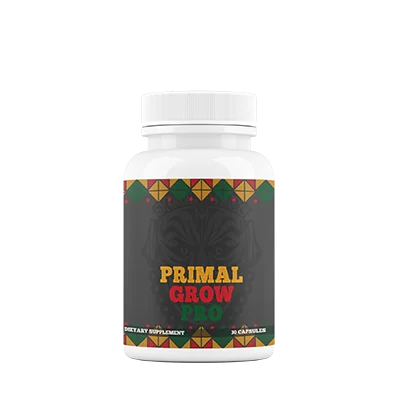
Order Primal Grow Pro on the official website
Seven named ingredients, one capsule a day, and a refund window that covers opened bottles if it does not suit you.
One bottle $69 · four bottles $196 · 60-day money-back guarantee
Order Primal Grow Pro On The Official WebsiteOne capsule a day · 30 per bottle · lot PRI-26/PR-3833