Primal Grow Pro Official Website › Ingredients
IngredientsPrimal Grow Pro Ingredients: All Seven Names, And What Each One Carries
Primal Grow Pro names seven ingredients on its artwork and gives an amount for none of them.
They are ginkgo biloba, bacopa monnieri, L-carnitine, L-glutamine, vinpocetine, St. John’s wort and huperzine. This page takes each in turn, says which of the seller’s four supports it has to carry, and prints the daily amount its own published trials used.
One capsule a day holds all seven. Here is what each of them is, what the human research on it actually measured, and which promise on the front of the bottle it is standing behind.
What the Primal Grow Pro artwork names, and where the list comes from
Three sources, seven names, and no disagreement between them.
Three sources name the ingredients in this capsule and all three agree. The INSIDE graphic supplied with the pack draws all seven around a photograph of the bottle and closes with a printed strip reading “30 CAPSULES | SEVEN NAMED INGREDIENTS | DIETARY SUPPLEMENT”. The seller’s own page repeats the same seven. The distributor’s product sheet carries them again.
That agreement is worth stating because it is not universal on this shelf. Products in this category frequently publish two ingredient lists that do not match, or a graphic that names fewer items than the sales copy. Here the seven are stable across every place they appear, and the artwork is if anything the most complete of the three, since it is the only one that also prints the capsule count.
One spelling note. The artwork prints “Bacopa Monnieri” and “ST. JOHN’S WORT”; the seller’s sales page prints “Bacopa Moneri” and “Saint John’s Wort”. The label is the object that arrives in the box, so this website follows the label.
The seven Primal Grow Pro ingredients, one at a time
Each name, what it is, what its human record shows and the daily amount that record was built on.
Ginkgo Biloba
Ginkgo biloba, leafCarries circulationLeaf extract from a tree that has been in continuous cultivation longer than most countries have existed, and the most thoroughly trialled name on this label by a wide margin. The standardised preparations used in research are specified by two marker groups, flavone glycosides and terpene lactones, and the trials ran at 120 to 240 mg a day split across two or three servings.
The circulation evidence is the reason it sits under that support. The Cochrane review of ginkgo in intermittent claudication pooled trials measuring pain-free walking distance in people with narrowed leg arteries, which is about as physical a circulatory endpoint as a supplement gets measured against. The pooled result showed no meaningful advantage over placebo. That is a real finding rather than a silence, and it is the sort of thing a buyer is better off knowing.
In this product's own territory the record is friendlier. A systematic review of ginkgo and sexual function collects the human trials, two of which were run in people whose difficulty was linked to antidepressant treatment: a placebo-controlled trial and a triple-blind one. Neither is large and neither settles the question, but both exist, which is more than most ingredients on this shelf can say.
Bacopa Monnieri
Bacopa monnieri, whole plantCarries mental sharpnessA creeping marsh herb with a long Ayurvedic history and, unusually for that category, a modern trial record that holds up to pooling. The meta-analysis of its randomised trials found a consistent improvement in the speed of attention tasks at 300 mg a day of a standardised extract.
The number to carry away is not the dose, it is the duration. The twelve-week trial in older adults is the shape most of this evidence takes, and twelve weeks is what the trials waited before measuring. A 2025 trial in healthy adults ran on a similar clock. Bacopa is not an ingredient that reports for duty in a fortnight.
The 2026 network meta-analysis compares bacopa and ginkgo directly and places the band where an effect is measurable at 600 mg a day and above, with 300 to 600 mg as the low-dose comparator. Both of those figures are large for a capsule that also has to hold six other things.
L-Carnitine
LevocarnitineCarries energyA compound the body synthesises from two amino acids and also takes in from red meat and dairy. Its job inside a cell is transport: it carries long-chain fatty acids into the mitochondria, where they are oxidised. That is why it sits under energy, and it is a description of biochemistry rather than a promise about how an afternoon will feel.
Its relevance to this particular shelf rests on one trial of propionyl-L-carnitine at two grams a day, given alongside prescription sildenafil in men with diabetes. The combination outperformed the medicine alone. What that result belongs to is the combination, and a capsule is not a prescription tablet.
A meta-analysis of carnitine, coenzyme Q10 and selenium in couples with unexplained male infertility is the other body of work worth knowing about. Both literatures work in grams: two grams a day is two thousand milligrams of a single ingredient, which is the figure the dosage discussion on the home page turns on.
L-Glutamine
L-glutamineCarries energyThe most abundant free amino acid in human plasma, present in ordinary protein foods in quantity, and the least exotic thing on this ingredient list. It is a fuel source for the cells lining the gut and for immune cells, and it becomes conditionally essential under severe physiological stress.
The tolerance study in healthy adults is the one that establishes what an oral serving of it looks like, and it worked in grams per kilogram of body weight: 0.3, 0.6 and 0.9 g/kg. For an average adult that is tens of grams, not hundreds of milligrams.
A review of amino-acid supplement safety covers glutamine alongside carnitine and arginine and finds no kidney signal at ordinary intakes in healthy people. It is a well-tolerated ingredient. What it is not, at any amount a capsule could hold, is a large dose of itself.
Vinpocetine
Synthesised from vincamineNot one of the four supportsThe one name here that is not a plant extract. Vinpocetine is made in a laboratory from vincamine, an alkaloid originally isolated from lesser periwinkle, and the review that sets out what it is describes it in exactly those terms. It is sold as a prescription medicine in several countries, where clinical use runs 5 to 10 mg three times a day.
A meta-analysis of vinpocetine in acute ischaemic stroke is the largest recent body of clinical work on it. The research setting is hospital neurology, not everyday male vitality, and nothing in that literature transfers to a once-daily capsule.
A survey of American supplements containing it measured what bottles actually held against what they declared, and a later analysis of cognitive-enhancement products covers the same ground. Both are worth reading by anyone who buys in this category, whatever the bottle.
St. John’s Wort
Hypericum perforatumNot one of the four supportsA yellow-flowered European herb with one of the largest trial records in botanical medicine, all of it in mood rather than in anything this bottle is sold for. The Cochrane review covers major depression, a placebo-controlled trial at 900 mg a day is a representative positive result, and the JAMA trial is a representative null one.
Its presence on a male vitality list is the single most consequential thing about this ingredient panel, and the reason has nothing to do with what it does on its own. Hypericum induces the liver enzymes and transporters that clear a long list of prescription medicines, which lowers their blood concentration and can make them stop working. The 2020 review of that evidence sets out which drug classes are reached.
Hormonal contraceptives are among them, which a systematic review and a randomised trial both examined directly. The label is written for adult men, so that particular combination is unlikely here, but it is the clearest illustration of how far the interaction reaches. Anyone on a prescription should raise this bottle with their prescriber first.
Huperzine
Huperzia serrata, huperzine ACarries mental sharpnessAn alkaloid from a Chinese club moss, and the only ingredient on this label whose studied amounts are measured in micrograms rather than milligrams. It inhibits acetylcholinesterase, the enzyme that breaks down acetylcholine, which is the same mechanism a class of prescription dementia medicines uses.
A meta-analysis of its randomised trials in Alzheimer's disease reported improvements on cognitive scales at a few hundred micrograms a day. The Cochrane review in mild cognitive impairment is more cautious about the quality of the underlying studies, which is the honest way to hold both findings at once.
An assay of huperzine A products on sale is the piece that matters most to a buyer. It found meaningful variation between declared and measured content across the market, which is a reason to buy from a channel that will answer a question about a lot number rather than from a marketplace listing.
Primal Grow Pro ingredients against the doses their trials used
Seven names, seven blanks, and seven real figures from the research each name borrows its reputation from.
The right-hand column is the whole of what can be compared here, and two things fall out of it without any opinion attached.
Scale is the first. A capsule shell of ordinary size holds a little under a gram of powder in total. Carnitine’s trial amount alone is two grams and glutamine’s is measured per kilogram of body weight. Neither can be present here at the amount its own research used, and the same arithmetic is gentler on huperzine, which works in micrograms and could sit at a studied amount comfortably.
Time is the second. Bacopa’s trials ran twelve weeks before measuring anything. Ginkgo’s largest trial ran six years. Whatever amounts are in this capsule, the ingredients in it are not the kind that report back quickly, and that has more practical consequence for a buyer than the missing figures do.
Which Primal Grow Pro ingredient carries which of the four supports
The mapping this website is built around, restated here with the trial amounts attached.
| Ingredient | The support it carries | Trial doses in that literature |
|---|---|---|
| Ginkgo Biloba | Circulation, and part of everyday male vitality | 120 to 240 mg a day of a standardised leaf extract, split across two or three doses |
| Bacopa Monnieri | Mental sharpness | 300 mg a day of a standardised extract for twelve weeks; the 2026 analysis puts its measurable band at 600 mg and above |
| L-Carnitine | Energy, and part of everyday male vitality | 2 g a day of propionyl-L-carnitine, given alongside prescription sildenafil |
| L-Glutamine | Energy | measured per kilogram of body weight, in grams: 0.3 to 0.9 g/kg in the tolerance work |
| Vinpocetine | None of the four the seller names | 5 to 10 mg three times a day where it is used clinically |
| St. John's Wort | None of the four the seller names | 900 mg a day, given as 300 mg three times a day |
| Huperzine | Mental sharpness | a few hundred micrograms a day, split in two |
The support column follows the published human literature for each ingredient, not the seller’s description of it.
Two of the seven carry none of the four. Vinpocetine’s clinical literature is hospital neurology and St. John’s wort’s is mood, and neither of those is on the front of this bottle. That is not an accusation, it is a description: a seven-ingredient formula whose marketing names four supports will usually have ingredients doing something the marketing does not mention.
What it does mean is that a buyer choosing this bottle for circulation is in practice choosing ginkgo, and a buyer choosing it for energy is choosing two amino compounds. Knowing which name is behind the promise is the nearest thing to a dose comparison this label allows, and it is the reason the benefits page is organised around the four supports rather than around the seven names.
What is not in Primal Grow Pro
Four things worth confirming by their absence, and one thing this label does better than most of its shelf.
- No caffeine, and no other stimulant. Nothing on this label produces a same-day effect.
- No hormone, hormone precursor or anything that acts on one. The seller makes no testosterone claim and neither does this desk.
- No prescription medicine. Screens of this category have found undeclared sildenafil and tadalafil in products sold as natural, which is an argument for buying through the seller’s own channel rather than a marketplace listing.
- No proprietary blend name hiding the list. All seven are printed.
- No claim on the bottle beyond “DIETARY SUPPLEMENT”. The four supports are the seller’s wording, not the label’s.
The absence of a blend name is worth dwelling on for a moment, because it is the thing this label does best. A great many products in this category pool their ingredients into one or two named complexes with a single total weight, which makes the individual amounts unknowable by design rather than by omission. This one simply prints the names.
Primal Grow Pro ingredient questions
How many ingredients are in it?
Seven, and all seven are named on the supplied ingredient artwork, on the seller’s page and in the distributor’s own product sheet. All three lists agree.
How much of each one is in a capsule?
No figure appears for any of them, on the bottle or anywhere in the supplied artwork. The right-hand column of the table on this page gives the daily amount each ingredient’s own trials used instead, attributed to those trials.
Which ingredient is there the most of?
That cannot be answered from this label. A printed panel lists ingredients in descending order of weight, which is how a buyer normally works it out; with no panel there is no ordering rule, and the sequence on the artwork carries no weight information.
Is vinpocetine a herb?
No. It is synthesised in a laboratory from vincamine, an alkaloid from lesser periwinkle. That is worth knowing beside the natural-ingredients roundel the pack ships with.
Why is St. John’s wort in a male vitality capsule?
The seller does not say, and it sits under none of the four supports it names. What matters practically is its interaction record, which is covered on the side effects page.
Is there caffeine or any other stimulant?
No. Nothing on this list is a stimulant, which is also why the first week feels like nothing in particular.
Who publishes this Primal Grow Pro website?
- Nicolaï SP, Kruidenier LM, Bendermacher BL, et al. Ginkgo biloba for intermittent claudication. Cochrane Database Syst Rev. 2013;2013(6):CD006888. PMID 23744597. https://pubmed.ncbi.nlm.nih.gov/23744597/
- Niazi Mashhadi Z, Irani M, Kiyani Mask M, et al. A systematic review of clinical trials on Ginkgo (Ginkgo biloba) effectiveness on sexual function and its safety. Avicenna J Phytomed. 2021;11(4):324-331. PMID 34290964. https://pubmed.ncbi.nlm.nih.gov/34290964/
- Kang BJ, Lee SJ, Kim MD, et al. A placebo-controlled, double-blind trial of Ginkgo biloba for antidepressant-induced sexual dysfunction. Hum Psychopharmacol. 2002;17(6):279-84. PMID 12404672. https://pubmed.ncbi.nlm.nih.gov/12404672/
- Wheatley D. Triple-blind, placebo-controlled trial of Ginkgo biloba in sexual dysfunction due to antidepressant drugs. Hum Psychopharmacol. 2004;19(8):545-8. PMID 15378664. https://pubmed.ncbi.nlm.nih.gov/15378664/
- Kongkeaw C, Dilokthornsakul P, Thanarangsarit P, et al. Meta-analysis of randomized controlled trials on cognitive effects of Bacopa monnieri extract. J Ethnopharmacol. 2014;151(1):528-35. PMID 24252493. https://pubmed.ncbi.nlm.nih.gov/24252493/
- Calabrese C, Gregory WL, Leo M, et al. Effects of a standardized Bacopa monnieri extract on cognitive performance, anxiety, and depression in the elderly: a randomized, double-blind, placebo-controlled trial. J Altern Complement Med. 2008;14(6):707-13. PMID 18611150. https://pubmed.ncbi.nlm.nih.gov/18611150/
- Lopresti AL, Smith SJ. The effects of a Bacopa monnieri extract on cognition, stress, and fatigue in healthy adults: a randomized, double-blind, placebo-controlled trial. Clin Drug Investig. 2025;45(12):967-982. PMID 41091332. https://pubmed.ncbi.nlm.nih.gov/41091332/
- Tiemtad P, Ingkaninan K, Temkitthawon P, et al. Comparative effects of Bacopa monnieri and Ginkgo biloba on cognitive functions: a systematic review and network meta-analysis. Phytomedicine. 2026;153:157915. PMID 41678913. https://pubmed.ncbi.nlm.nih.gov/41678913/
- Gentile V, Vicini P, Prigiotti G, et al. Preliminary observations on the use of propionyl-L-carnitine in combination with sildenafil in patients with erectile dysfunction and diabetes. Curr Med Res Opin. 2004;20(9):1377-84. PMID 15383186. https://pubmed.ncbi.nlm.nih.gov/15383186/
- Sharma AP, Sharma G, Kumar R. Systematic review and meta-analysis on effect of carnitine, coenzyme Q10 and selenium on pregnancy and semen parameters in couples with idiopathic male infertility. Urology. 2022;161:4-11. PMID 34871624. https://pubmed.ncbi.nlm.nih.gov/34871624/
- Ogden HB, Child RB, Fallowfield JL, et al. Gastrointestinal tolerance of low, medium and high dose acute oral L-glutamine supplementation in healthy adults: a pilot study. Nutrients. 2020;12(10). PMID 32992440. https://pubmed.ncbi.nlm.nih.gov/32992440/
- Davani-Davari D, Karimzadeh I, Sagheb MM, et al. The renal safety of L-carnitine, L-arginine, and glutamine in athletes and bodybuilders. J Ren Nutr. 2019;29(3):221-234. PMID 30341034. https://pubmed.ncbi.nlm.nih.gov/30341034/
- Zhang YS, Li JD, Yan C. An update on vinpocetine: new discoveries and clinical implications. Eur J Pharmacol. 2018;819:30-34. PMID 29183836. https://pubmed.ncbi.nlm.nih.gov/29183836/
- Panda PK, Ramachandran A, Panda P, et al. Safety and efficacy of vinpocetine as a neuroprotective agent in acute ischemic stroke: a systematic review and meta-analysis. Neurocrit Care. 2022;37(1):314-325. PMID 35488169. https://pubmed.ncbi.nlm.nih.gov/35488169/
- Avula B, Chittiboyina AG, Sagi S, et al. Identification and quantification of vinpocetine and picamilon in dietary supplements sold in the United States. Drug Test Anal. 2016;8(3-4):334-43. PMID 26426301. https://pubmed.ncbi.nlm.nih.gov/26426301/
- Cohen PA, Avula B, Wang YH, et al. Five unapproved drugs found in cognitive enhancement supplements. Neurol Clin Pract. 2021;11(3):e303-e307. PMID 34484905. https://pubmed.ncbi.nlm.nih.gov/34484905/
- Linde K, Berner MM, Kriston L. St John's wort for major depression. Cochrane Database Syst Rev. 2008;2008(4):CD000448. PMID 18843608. https://pubmed.ncbi.nlm.nih.gov/18843608/
- Lecrubier Y, Clerc G, Didi R, et al. Efficacy of St. John's wort extract WS 5570 in major depression: a double-blind, placebo-controlled trial. Am J Psychiatry. 2002;159(8):1361-6. PMID 12153829. https://pubmed.ncbi.nlm.nih.gov/12153829/
- Hypericum Depression Trial Study Group. Effect of Hypericum perforatum (St John's wort) in major depressive disorder: a randomized controlled trial. JAMA. 2002;287(14):1807-14. PMID 11939866. https://pubmed.ncbi.nlm.nih.gov/11939866/
- Nicolussi S, Drewe J, Butterweck V, et al. Clinical relevance of St. John's wort drug interactions revisited. Br J Pharmacol. 2020;177(6):1212-1226. PMID 31742659. https://pubmed.ncbi.nlm.nih.gov/31742659/
- Berry-Bibee EN, Kim MJ, Tepper NK, et al. Co-administration of St. John's wort and hormonal contraceptives: a systematic review. Contraception. 2016;94(6):668-677. PMID 27444983. https://pubmed.ncbi.nlm.nih.gov/27444983/
- Pfrunder A, Schiesser M, Gerber S, et al. Interaction of St John's wort with low-dose oral contraceptive therapy: a randomized controlled trial. Br J Clin Pharmacol. 2003;56(6):683-90. PMID 14616430. https://pubmed.ncbi.nlm.nih.gov/14616430/
- Yang G, Wang Y, Tian J, et al. Huperzine A for Alzheimer's disease: a systematic review and meta-analysis of randomized clinical trials. PLoS One. 2013;8(9):e74916. PMID 24086396. https://pubmed.ncbi.nlm.nih.gov/24086396/
- Yue J, Dong BR, Lin X, et al. Huperzine A for mild cognitive impairment. Cochrane Database Syst Rev. 2012;12(12):CD008827. PMID 23235666. https://pubmed.ncbi.nlm.nih.gov/23235666/
- Crawford C, Wang YH, Avula B, et al. The scoop on brain health dietary supplement products containing huperzine A. Clin Toxicol (Phila). 2020;58(10):991-996. PMID 31990212. https://pubmed.ncbi.nlm.nih.gov/31990212/
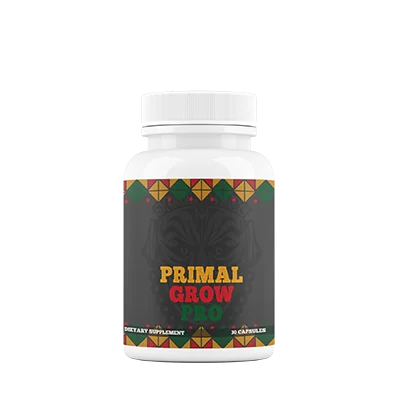
Order Primal Grow Pro on the official website
Seven named ingredients, one capsule a day with a meal, and sixty days to decide. The two-bottle pack is the one whose supply matches the window.
One bottle $69 · four bottles $196 · 60-day money-back guarantee
Order Primal Grow Pro On The Official WebsiteOne capsule a day · 30 per bottle · lot PRI-26/PR-3833