Primal Grow Pro Official Website › How It Works
How It WorksHow Does Primal Grow Pro Work? Seven Ingredients, Seven Routes
Primal Grow Pro delivers seven substances at once, and each one has its own route through the body.
Ginkgo acts on blood vessels and platelets. Carnitine and glutamine are metabolic substrate. Bacopa, huperzine and vinpocetine act on the brain. St. John’s wort acts on liver enzymes. No trial of the combination exists, so this page describes the seven separately.
An honest mechanism page for a blend has to resist the temptation to invent a combined story. Here is what each of the seven actually does, and where the evidence for it comes from.
What a Primal Grow Pro capsule does in the first hour
One shell, seven ingredients, and they stop having anything in common the moment it opens.
A gelatin or plant-based shell opens in the stomach within a few minutes of being swallowed and releases its powder. From there the seven ingredients part company entirely: each one is absorbed at its own rate, reaches its own tissues and is cleared on its own schedule.
How much of an ingredient survives that journey is a real variable rather than a technicality. A crossover study comparing two ginkgo preparations measured very different plasma levels from the same herb depending on how it was formulated, and a pharmacokinetic study of a single oral dose tracked how its marker compounds distribute. Two products naming the same botanical are not necessarily delivering the same thing.
The label’s instruction to take the capsule with a meal helps on both counts. Food slows gastric emptying, which generally improves the absorption of fat-soluble plant constituents, and it reduces the stomach unsettlement botanicals sometimes cause on an empty one.
How the circulation ingredient in Primal Grow Pro is supposed to act
One ingredient, a well-described mechanism, and a trial result that does not follow from it as neatly as the mechanism suggests.
Ginkgo leaf extract is the only name on this label attached to circulation, and its proposed mechanism is well described: the flavone glycosides act as antioxidants, the terpene lactones antagonise platelet-activating factor, and the combination is held to affect the tone of small blood vessels and the tendency of platelets to aggregate.
That mechanism is not in dispute. What is worth being straight about is what happened when it was tested against a physical outcome. The Cochrane review of ginkgo in intermittent claudication pooled randomised trials in people whose leg arteries were narrowed enough to limit how far they could walk without pain, and found no meaningful improvement over placebo.
The platelet half of the mechanism, on the other hand, is real enough to have generated its own safety literature. A review of ginkgo alongside antiplatelet and anticoagulant medicines concludes the risk has been overstated relative to the case reports but is not nothing, and a systematic review of warfarin interactions covers it among the supplements worth mentioning to a prescriber. An ingredient whose mechanism is strong enough to warrant that discussion is an ingredient doing something.
How the two amino compounds in Primal Grow Pro fit in
Substrate, not stimulation, and both of them already in your dinner.

L-carnitine and L-glutamine are the two names here that are not botanicals, and they behave accordingly. Carnitine shuttles long-chain fatty acids into the mitochondria, which is the step before they can be oxidised for energy. Glutamine is a fuel for gut lining cells and immune cells and the most abundant free amino acid in the blood.
Neither is a stimulant and neither has an acute effect worth describing. Both are present in ordinary food in quantities that dwarf anything a capsule holds: a substantial portion of red meat supplies more carnitine than most supplements do, and any protein-containing meal supplies glutamine.
The honest framing for these two is that they are substrate rather than signal. They give the body more of something it already uses, on the reasoning that more substrate may help where supply is limiting. In a well-fed adult it usually is not, which is why the safety literature on them is more substantial than the efficacy literature.
The rainforest image above ships with this product’s marketing pack. It shows the stilt roots of a tropical palm and it illustrates the botanical category rather than any of the seven ingredients: none of them comes from a plant of that kind. It is included because the pack includes it, and labelled for what it is.
How the three cognitive ingredients in Primal Grow Pro act
Three different mechanisms, three different literatures, and all three acting somewhere the label does not lead with.
Bacopa: adaptation over weeks
The proposed mechanism involves antioxidant activity in the hippocampus and effects on dendritic branching, which is a slow structural story rather than a fast chemical one. That fits the trial data: the pooled randomised trials find improvements in attention speed after roughly twelve weeks, not after a dose. A systematic review of herbal cognitive medicines in older adults places it among the better-supported options in a field where that is a low bar.
Huperzine: an enzyme, directly
Huperzine A inhibits acetylcholinesterase, so less acetylcholine is broken down at the synapse. This is the most pharmacologically direct mechanism on the label and it is shared with a class of prescription medicines. The meta-analysis of its trials reports cognitive-scale improvements at a few hundred micrograms a day; the Cochrane review is more reserved about the trial quality behind them.
Vinpocetine: cerebral blood flow, in a hospital setting
Vinpocetine is described as increasing cerebral blood flow and inhibiting a phosphodiesterase subtype. Its largest recent clinical literature is in acute ischaemic stroke, which is several worlds away from a daily capsule taken at breakfast. The review of what it is makes the laboratory origin plain.
These three are the largest evidence base on the label and they are the three furthest from the front of the bottle. A buyer picking this capsule up for circulation or energy is, on the ingredient list, buying a formula whose best-researched components act on cognition.
What Primal Grow Pro does to other medicines, and why that counts as a mechanism
One ingredient here acts on medicines rather than on symptoms, and that belongs on a mechanism page.
Most mechanism sections stop at what an ingredient does to you. One ingredient here has a well-documented effect on what other substances do to you, and leaving it out of a mechanism page would be the wrong kind of tidy.
St. John’s wort induces cytochrome P450 enzymes, chiefly CYP3A4, and the P-glycoprotein transporter. The practical effect is that medicines cleared by those routes are cleared faster, so their concentration in the blood falls. The 2020 review of the clinical evidence catalogues which classes are affected, and the broader systematic review of herb-drug interactions places it at the top of the list.
This is a real pharmacological mechanism, described in exactly the same terms a drug interaction would be. It is the reason the side effects page on this website is longer than the category norm, and the reason the single most useful thing a buyer on a prescription can do is show the ingredient list to their prescriber before the first capsule.
What Primal Grow Pro cannot be said to do
Three things a mechanism page cannot claim, however good the mechanisms are.
No trial has tested these seven ingredients together in this combination, so no result anywhere describes what the finished capsule does. Everything above is ingredient-level evidence, and ingredient-level evidence does not transfer to a blend. The network meta-analysis of nutraceutical interventions is the clearest illustration of how modest the conclusions are even where single ingredients have been tested properly.
Two further limits are worth stating in the same place. Without printed amounts, the strength of the blend is knowable only inside the supply chain that made it. And a mechanism is not a result: a substance can have an impeccably described route of action and still fail to change anything measurable, which is precisely what happened to ginkgo in the walking-distance trials.
What this page can honestly say is that seven real substances with real literatures are being delivered in a capsule that is easy to keep taking, and that the evidence behind them varies from substantial to thin depending which name you look at.
Primal Grow Pro mechanism questions
Does it work by raising testosterone?
No, and no claim of that kind appears on this website. None of the seven names has a hormonal mechanism and the seller does not describe one.
Is there one mechanism behind all seven ingredients?
No. Seven ingredients means seven separate literatures and seven separate routes. No trial of this particular combination exists, so nothing here describes a combined effect.
Which ingredient does the most work?
On the published evidence, ginkgo: it is the only name with a circulatory trial measuring a physical outcome, and it is the only one attached to two of the seller’s four supports.
How quickly does anything here act?
Slowly. Nothing on this label is a stimulant, and every ingredient with a human record has it after weeks of daily use rather than after a dose.
Does the capsule dissolve before the ingredients can act?
A capsule shell opens in the stomach within minutes. What happens afterwards is absorption, which varies by ingredient: a crossover study of ginkgo absorption gives a sense of how much that can differ between preparations of the same herb.
Who publishes this Primal Grow Pro website?
- Nicolaï SP, Kruidenier LM, Bendermacher BL, et al. Ginkgo biloba for intermittent claudication. Cochrane Database Syst Rev. 2013;2013(6):CD006888. PMID 23744597. https://pubmed.ncbi.nlm.nih.gov/23744597/
- Bone KM. Potential interaction of Ginkgo biloba leaf with antiplatelet or anticoagulant drugs: what is the evidence? Mol Nutr Food Res. 2008;52(7):764-71. PMID 18214851. https://pubmed.ncbi.nlm.nih.gov/18214851/
- Briskey D, Rao A. A double-blind, randomised cross-over study to evaluate the absorption of a commercially available Ginkgo biloba extract compared to the liposomal extract Ginkgosome. BMC Complement Med Ther. 2022;22(1):206. PMID 35922794. https://pubmed.ncbi.nlm.nih.gov/35922794/
- Ude C, Paulke A, Nöldner M, et al. Plasma and brain levels of terpene trilactones in rats after an oral single dose of standardized Ginkgo biloba extract EGb 761. Planta Med. 2011;77(3):259-64. PMID 20814851. https://pubmed.ncbi.nlm.nih.gov/20814851/
- Tan CSS, Lee SWH. Warfarin and food, herbal or dietary supplement interactions: a systematic review. Br J Clin Pharmacol. 2021;87(2):352-374. PMID 32478963. https://pubmed.ncbi.nlm.nih.gov/32478963/
- Davani-Davari D, Karimzadeh I, Sagheb MM, et al. The renal safety of L-carnitine, L-arginine, and glutamine in athletes and bodybuilders. J Ren Nutr. 2019;29(3):221-234. PMID 30341034. https://pubmed.ncbi.nlm.nih.gov/30341034/
- Kongkeaw C, Dilokthornsakul P, Thanarangsarit P, et al. Meta-analysis of randomized controlled trials on cognitive effects of Bacopa monnieri extract. J Ethnopharmacol. 2014;151(1):528-35. PMID 24252493. https://pubmed.ncbi.nlm.nih.gov/24252493/
- Cave AE, Chang DH, Münch GW, et al. A systematic review of the safety and efficacy on cognitive function of herbal and nutritional medicines in older adults with and without subjective cognitive impairment. Syst Rev. 2023;12(1):143. PMID 37592293. https://pubmed.ncbi.nlm.nih.gov/37592293/
- Yang G, Wang Y, Tian J, et al. Huperzine A for Alzheimer's disease: a systematic review and meta-analysis of randomized clinical trials. PLoS One. 2013;8(9):e74916. PMID 24086396. https://pubmed.ncbi.nlm.nih.gov/24086396/
- Yue J, Dong BR, Lin X, et al. Huperzine A for mild cognitive impairment. Cochrane Database Syst Rev. 2012;12(12):CD008827. PMID 23235666. https://pubmed.ncbi.nlm.nih.gov/23235666/
- Panda PK, Ramachandran A, Panda P, et al. Safety and efficacy of vinpocetine as a neuroprotective agent in acute ischemic stroke: a systematic review and meta-analysis. Neurocrit Care. 2022;37(1):314-325. PMID 35488169. https://pubmed.ncbi.nlm.nih.gov/35488169/
- Zhang YS, Li JD, Yan C. An update on vinpocetine: new discoveries and clinical implications. Eur J Pharmacol. 2018;819:30-34. PMID 29183836. https://pubmed.ncbi.nlm.nih.gov/29183836/
- Nicolussi S, Drewe J, Butterweck V, et al. Clinical relevance of St. John's wort drug interactions revisited. Br J Pharmacol. 2020;177(6):1212-1226. PMID 31742659. https://pubmed.ncbi.nlm.nih.gov/31742659/
- Izzo AA, Ernst E. Interactions between herbal medicines and prescribed drugs: a systematic review. Drugs. 2001;61(15):2163-75. PMID 11772128. https://pubmed.ncbi.nlm.nih.gov/11772128/
- Barbonetti A, Tienforti D, Antolini F, et al. Nutraceutical interventions for erectile dysfunction: a systematic review and network meta-analysis. J Sex Med. 2024;21(11):1054-1063. PMID 39279185. https://pubmed.ncbi.nlm.nih.gov/39279185/
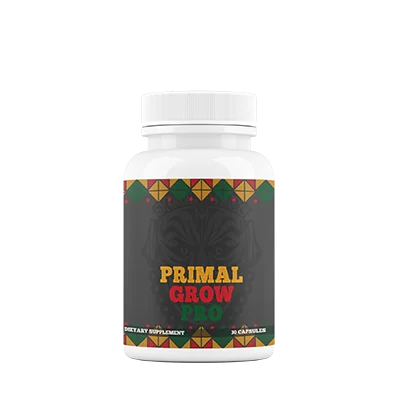
Order Primal Grow Pro on the official website
Seven ingredients with seven separate literatures, one capsule a day, and a sixty-day window to judge it in.
One bottle $69 · four bottles $196 · 60-day money-back guarantee
Order Primal Grow Pro On The Official WebsiteOne capsule a day · 30 per bottle · lot PRI-26/PR-3833